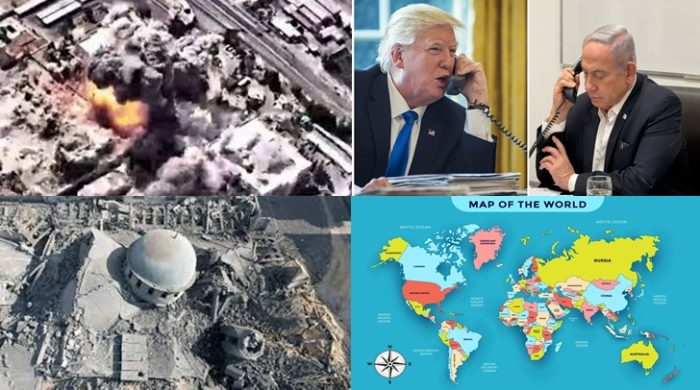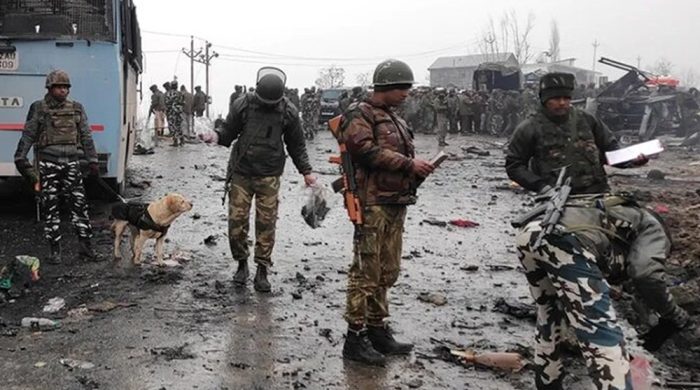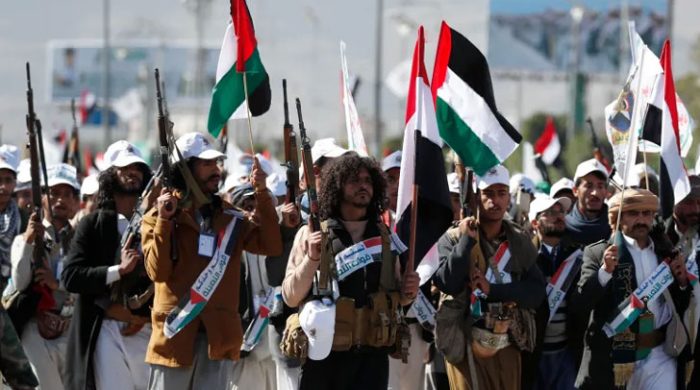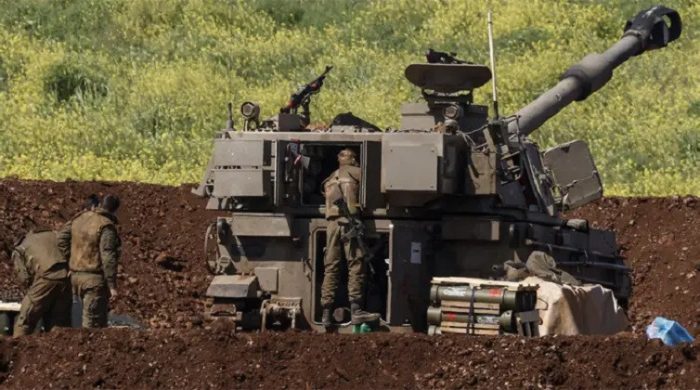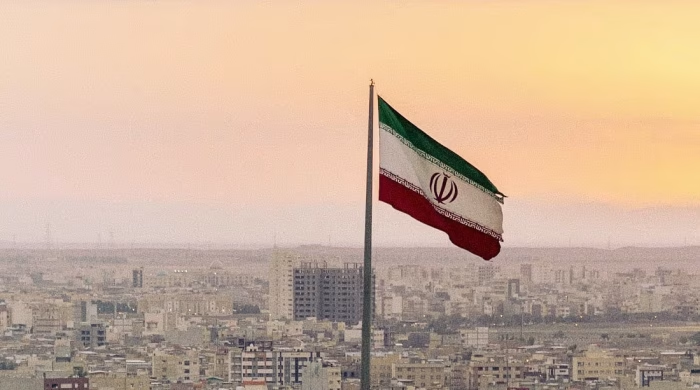
The ongoing conflict between Iran, Israel, and the United States has entered its 28th day as of Wednesday, marked by successive threats and attacks. After nearly a month of fighting, the war has pushed the entire Middle East into deep uncertainty and a severe humanitarian crisis. The conflict is no longer limited to aerial exchanges of missiles and drones; the region now stands on the brink of a possible ground war. According to U.S. media reports, the White House and Pentagon are carefully reviewing strategies for deploying ground forces alongside large-scale airstrikes aimed at delivering a “final blow” inside Iran. In response, Tehran has announced the organization of over one million trained and motivated Iranian fighters to counter any potential U.S. ground incursion and defend national sovereignty. This uncompromising stance from both sides has intensified regional uncertainty.
U.S. Military Preparations vs. Diplomatic Statements
While Washington publicly emphasizes peace talks, it continues to expand its military presence in the region. U.S. President Donald Trump has claimed that negotiations are “going very well,” but defense analysts suggest these discussions may be a prelude to a major attack. The Pentagon plans to send an additional 10,000 ground troops to the Middle East, including infantry units and advanced armored vehicles. Previously, the 82nd Airborne Division had placed 5,000 Marines and 2,000 paratroopers on high alert. Conversely, the Islamic Revolutionary Guard Corps (IRGC) of Iran has declared that it will deliver “historic hell” to U.S. forces on its soil without hesitation.
Pentagon Considers Four Military Options
The Pentagon is reviewing four primary military scenarios to strike Iran:
Iran Shifts to Offensive Strategy
Iran has transitioned from its 47-year defensive policy to a fully offensive posture. Brigadier General Abul Fazl Shekarchi, IRGC spokesperson, stated that they have already destroyed 17 U.S. military bases across the Middle East, including a drone strike on Prince Sultan Air Base in Saudi Arabia. Iran has also deployed “suicide sea drones” in the Persian Gulf for the first time to confront U.S. naval forces. Tehran is calling on thousands of young volunteers to join the Basij militia, reinforcing internal resistance beyond the one million organized fighters.
Rising Casualties and Destruction
The human and infrastructural toll continues to rise. Iranian government data and international human rights reports indicate 1,937 Iranians killed over the past month, predominantly civilians, with nearly 24,800 injured. Recent U.S.-Israeli airstrikes in Qom’s residential areas killed 18 people, leaving districts like Pardisan in ruins. High-ranking military commanders and Supreme Leader Ayatollah Ali Khamenei have also reportedly been killed, intensifying the conflict.
In Lebanon, Israeli air and ground operations have killed 1,116 people, including senior Hezbollah commander Hassan Mohammad Bashir. More than 3,200 were injured, and approximately 136,262 people were displaced. Iranian missile and drone attacks on Israel have resulted in 19 deaths and over 5,200 injuries. U.S. forces have lost 13 personnel, with around 200 injured. In Kuwait, Bahrain, and the UAE, Iranian missile debris has caused additional casualties. Iraq’s oil exports have fallen by over 70%, and regional airspace closures have paralyzed aviation.
Diplomatic Efforts and International Involvement
Behind the scenes, significant diplomatic efforts are underway. Pakistan’s Foreign Minister Ishaq Dar and China’s Foreign Minister Wang Yi held high-level talks addressing the global impact of the conflict. Pakistan and Turkey are mediating between the U.S. and Iran. The U.S. sent a 15-point peace proposal to Iran, including reopening the Strait of Hormuz, which Tehran rejected as “one-sided and unjust.”
Germany’s Foreign Minister Johann Wadephul claimed Russia is actively providing intelligence and technical support to Iran, possibly to distract global attention from Ukraine. France’s Armed Forces Chief General Fabien Mauduit discussed reopening the Strait of Hormuz with 35 countries via video conference, framing it as a “defensive” initiative. Analysts view these moves primarily as pressure tactics against Iran. Meanwhile, President Trump postponed attacks on Iranian energy facilities by 10 days to stabilize oil markets temporarily, though a permanent solution remains distant.
Israeli Military Strains and Internal Challenges
Ongoing conflict along the Iran-Lebanon border has caused unprecedented strains in the Israeli military. Chief of Staff Gadi Eizenkot warned the cabinet of imminent military collapse unless emergency measures, such as recalling former soldiers and extending mandatory service, are implemented. Opposition leader Yair Lapid criticized the government for “security failure” and inadequate war planning. As a result, Israel increasingly depends on U.S. air support.
Current Outlook
Analysts warn the Middle East faces a highly complex and uncertain crisis. President Trump’s April 6 deadline for military action serves as an ultimatum; without tangible diplomatic progress, the Pentagon’s “final blow” plan may be executed. Iran’s mobilization of over one million fighters and its missile strikes on U.S. bases suggest the conflict could escalate into a full-scale regional war. Disruption of the Strait of Hormuz and oil supply could trigger a global economic downturn. Diplomatic efforts by Pakistan and China are crucial, but failure may lead to devastating shifts in the Middle Eastern geopolitical landscape.